Steam Frame 2026: Price, Specs, Waitlist, and FEX Compatibility
Valve’s Steam Frame launches Sept 17 via a Steam waiting list, priced from $1,059 with Snapdragon 8 Gen 3 and Half-Life Alyx.
Valve’s Steam Frame has finally moved from rumor to retail reality, and the 2026 launch is shaping up to be one of the strangest hardware rollouts in recent memory. The headset is the last piece of Valve’s Steam Hardware trio, and it arrives with a Snapdragon 8 Gen 3, a copy of Half-Life Alyx, and a price tag that will make plenty of players do a double-take. The short version: the Steam Frame is real, it is expensive, and getting one may be the hardest boss fight of the year.
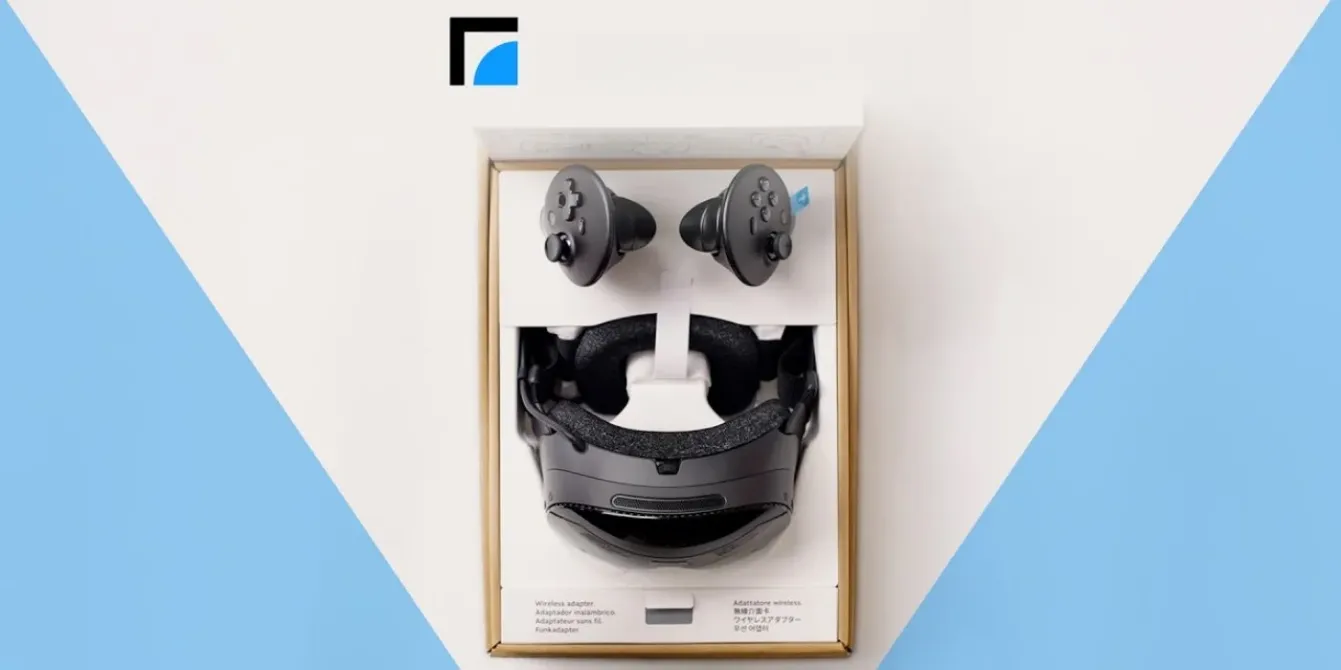
The launch date is September 17, but there is a catch. Like the Steam Machine before it, the Steam Frame will not simply sit on a store shelf waiting for buyers. Valve is using a waiting-list system on its Steam page, which means interested players join a queue and then wait for the results on September 17. In practice, that means a headset will arrive sometime in the future, not necessarily on launch day. It is a rollout designed to manage demand, but it also turns a hardware purchase into a small lottery. 🎟️
Valve is selling the 256 GB model for $1,059 and the 1 TB model for $1,299. The two headsets are otherwise identical, so the extra $240 buys storage and nothing else. Regional pricing will vary, and Valve’s storefront is the place to check local numbers. What is not in the box is a charger. That is right: a $1,059 VR headset ships without a power adapter. Owners can use a Steam Deck charger if they already have one, or any 45 W USB-C charger. Valve will sell its own charger for $30 in the US, though the European price of €40 has raised eyebrows. There is also an Ergonomic accessory pack for $59 and a replacement kit for $49; the latter is a replacement because those parts are already included in the base package.
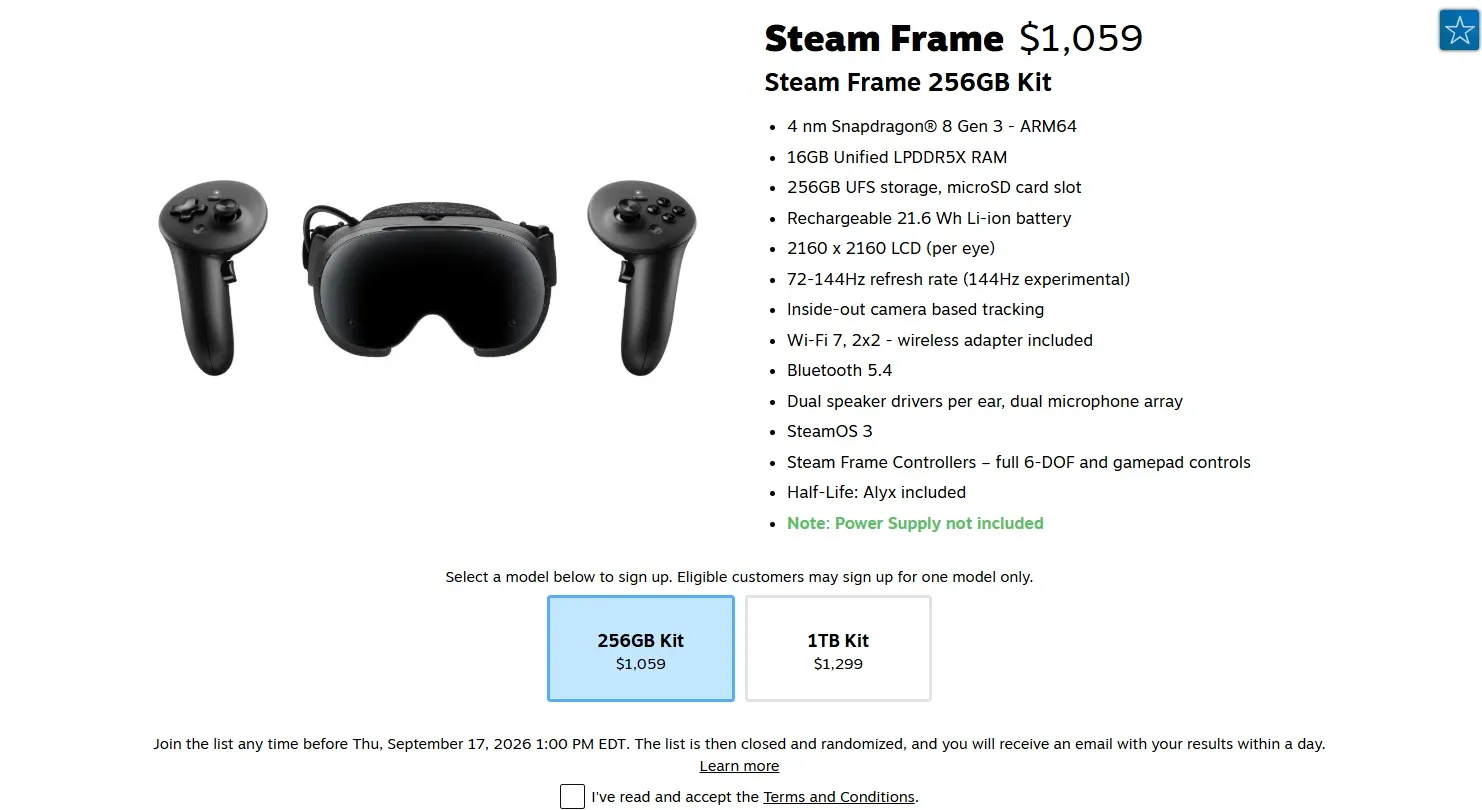
Here is the quick buyer’s math:
| Item | US price | Notes |
|---|---|---|
| Steam Frame 256 GB | $1,059 | Headset only, no charger |
| Steam Frame 1 TB | $1,299 | Same hardware, more storage |
| Valve charger | $30 | Any 45 W USB-C charger also works |
| Ergonomic accessory pack | $59 | Optional comfort add-on |
| Replacement kit | $49 | Parts already included in the box |
The controllers borrow the Steam Deck and Steam Controller layout, minus the trackpads. Each controller runs on a single AA battery, which is a genuinely player-friendly choice. Swapping a battery takes seconds, while waiting for a built-in battery to recharge takes the headset out of action. Valve’s recommendation is Nickel–Metal Hydride batteries, and that is a sensible tip for anyone who plans long sessions. 🔋
.webp)
The Steam Frame plays VR games standalone and connected to a PC through the included wireless dongle. It uses the 6 GHz Wi-Fi band, which is fast and relatively uncrowded, so latency should be less of a problem than on older wireless setups. Eye-tracking is on board, and Valve uses it for foveated streaming. The image sent from the PC is sharp where the player is looking and lower quality elsewhere, which shrinks the data stream and speeds up transmission. Unlike per-game foveated rendering, foveated streaming works regardless of whether a game supports eye-tracking. That is a clever platform-level trick, and it could make wireless PC VR feel much more reliable.
The weird and wonderful part is the ARM processor. Most VR games are built for x86 PCs, so Valve developed FEX, a compatibility layer that lets x86 applications run on ARM. The comparison to Proton is apt: Proton lets Windows games run on Linux, and FEX aims to let existing PC VR libraries run on the Frame. If it works well, the Steam Frame could have a library that stretches far beyond native ARM ports. Valve has also made FEX available to other developers, which means the tool could show up on phones and the growing crowd of Android handhelds. That is a bigger deal than it first sounds, because it could help ARM devices inherit decades of PC software.
There is more. The Frame can also run regular games on a giant virtual screen. That is not a replacement for a monitor, but it is a compelling extra for players who want a big-screen experience without a TV. It might even encourage a small revival of 3D games, though that is a hope rather than a promise. The headset is not just a VR accessory; it is a small computer for the face. 🥽
So what should players make of the Steam Frame? The specs are beefy, the price is premium, and the waiting list makes the launch feel more like a beta than a normal retail release. The missing charger is a stingy detail, and the accessory pricing adds up fast. Still, the combination of standalone VR, PC streaming, eye-tracked foveated streaming, and FEX compatibility is ambitious. Anyone thinking about joining the queue should budget for the headset, a charger, and maybe the ergonomic pack, then prepare for a wait. The Steam Frame is not an impulse buy; it is a commitment.